 Lost Chapters
How Did Blackbeard Die? The Battle at Ocracoke Inlet, 1718
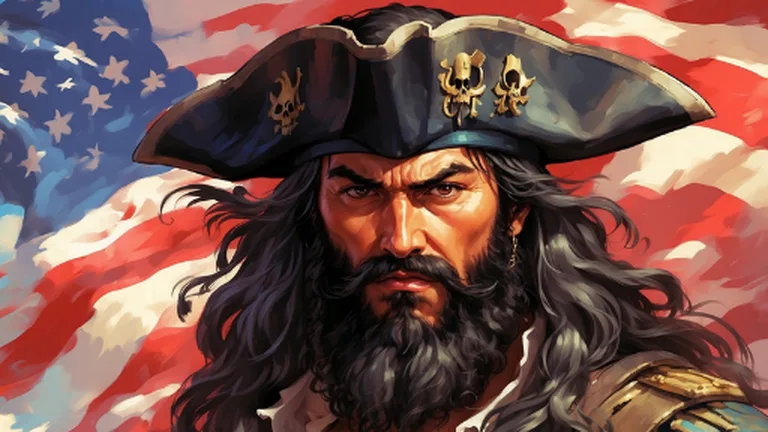
Short answer: Blackbeard died in battle on the morning of November 22, 1718, at Ocracoke Inlet on the North Carolina coast. Royal Navy sailors led by Lieutenant Robert Maynard, sent by Virginia's governor, trapped him in a brutal hand-to-hand fight on the deck of Maynard's sloop, and Blackbeard was killed after suffering several gunshot wounds and many cuts. Maynard cut off his head and hung it from his sloop's bowsprit as proof.
How did Blackbeard die? The short answer is "violently," but the full story is better: a pardoned pirate who could not stay retired, a governor who took matters into his own hands, and a fight decided at close quarters. Here is what the record shows, what the legend added, and how the game uses it.
Real history: who Blackbeard was
The man we call Blackbeard is usually named Edward Teach, but records spell it many ways, including Thatch and Thache, and some historians now think Thache is closer to his real name. NCpedia says he is "usually said to have been born in Bristol, England," and his early life is unknown. His birth year is uncertain too; estimates range from about 1660 to about 1680.
His career as a pirate captain was short. The National Park Service says it "likely lasted only two years." In late 1717 he captured a French slave ship, La Concorde, and renamed it Queen Anne's Revenge. In May 1718 his flotilla blockaded the harbor of Charleston, South Carolina, one of the busiest ports in the southern colonies. Among his demands was a chest of medicine, which he received.
Weeks later, around June 10, 1718, Queen Anne's Revenge ran aground at Topsail Inlet, now Beaufort Inlet, North Carolina. Blackbeard then took a royal pardon from North Carolina's governor, Charles Eden, and settled near the town of Bath. It did not last. He soon returned to his old ways, and the Park Service says he lived at Ocracoke Island for much of his final five months.
Real history: the governor who sent the navy
Alexander Spotswood, the governor of Virginia, decided not to wait for North Carolina to act. According to the North Carolina Department of Natural and Cultural Resources, he hired two sloops at his own expense, the Ranger and the Jane, and put them under Lieutenant Robert Maynard of the Royal Navy warship Pearl. About sixty navy sailors came along. Sloops were small and shallow, which mattered: the waters around Ocracoke are full of sandbars that big warships could not cross.
Real history: how Blackbeard died at Ocracoke Inlet, November 22, 1718
The battle went roughly like this:
- Aground. Early on November 22, Maynard's sloops moved in. Blackbeard lured them onto a sandbar, and they briefly ran aground.
- The broadside. Blackbeard's sloop fired a broadside from eight cannons that tore into both navy vessels.
- The trap. Maynard ordered his surviving men below deck, hoping the pirates would think the fight was over and come aboard.
- The boarding. The pirates threw grappling irons and boarded Maynard's sloop. The navy sailors rushed up from below, and a vicious hand-to-hand fight broke out on deck.
- The end. Blackbeard was killed in the melee, and the battle was over.
Accounts of his wounds differ a little. PBS NewsHour, reporting historian Colin Woodard's research in Maynard's own records, says Blackbeard fell "with five shot in him, and 20 dismal cuts." The North Carolina marker text says Maynard counted five pistol shots and numerous severe cuts. The National Park Service says he was killed by a wound to the throat. Every source agrees he did not go down easily.
Maynard had Blackbeard's head cut off and hung from the bowsprit of his sloop, and the body was thrown overboard. The head was later displayed on a pole at Hampton Roads in Virginia as a warning to other pirates.
Real history: what happened next
The captured crew were taken to Williamsburg, Virginia, and tried in March 1719. Most of them were hanged; sources give slightly different numbers. One of Blackbeard's men, Israel Hands, was pardoned.
Blackbeard's flagship had its own second life. On November 21, 1996, a search team from the research firm Intersal found cannon and anchors near Beaufort Inlet. After years of study, North Carolina officials announced in 2011 that they were confident the wreck was Queen Anne's Revenge. Artifacts from the wreck have since been raised and conserved by the Queen Anne's Revenge Project.
Myth vs record
- Myth: Blackbeard was a pirate for decades. Record: His time as a captain lasted about two years.
- Myth: He went down in a giant ship-to-ship battle with a warship. Record: He died fighting two small hired sloops in shallow water.
- Myth or maybe: Burning fuses under his hat. Record: Much of Blackbeard's famous look comes from a 1724 book, A General History of the Pyrates, by "Captain Charles Johnson." NCpedia treats Johnson as an important authority on the pirates of the era, but no one else recorded many of the book's most colorful details, so we treat them with caution.
The best documented thing about Blackbeard is that he worked hard at being frightening. The Park Service says he cultivated "an image of fear" that helped him become a very successful pirate.
In the game: Blackbeard's Crew
This section is about Lost Chapters, not history.
In Lost Chapters, Edward Teach, "Blackbeard," leads Garnet, the colour of rebels, pirates and war. His Leader plan is plunder and pressure: your Rebels get +1/+0, and whenever your Leader hits the enemy Leader, your opponent discards a random card.
His Command is called Broadside, a nod to the eight-gun volley that opened the fight at Ocracoke. For 5 crystals it deals 2 damage to every enemy character, which clears a board of small blockers in one shot.
His three Signature cards cost 1 less in his deck:
- Edward Teach, "Blackbeard", the character card, with Double Chapter and a charge that makes your opponent discard.
- The Queen Anne's Revenge, an Item that equips +3/+2 and Explore, and strips a card from your opponent's hand if you control Blackbeard.
- Bartholomew Roberts, another real pirate of the same era, who rewards you for charging first.
If your opponent is the one charging, Parley is a cheap Counter that cancels an attack.
In the game's invented story, a "forty-gun ship" sails out of a rift into a harbor town, and Blackbeard faces an Echo of himself: a taller, louder and crueler copy built from the legend rather than the man. That is fiction, but it fits the history surprisingly well. The real Blackbeard spent two years building a legend, and the legend has outlived him by three centuries.
Sail with Blackbeard
Blackbeard's Crew is one of the five first decks you can choose in Lost Chapters, and it is a great pick if you like fast, aggressive games. Play free in your browser, take the Garnet deck, and save Broadside for the turn their board is full.
Sources
- Blackbeard (Edward Teach), Cape Hatteras National Seashore, National Park Service
- Blackbeard the Pirate, NCpedia
- Lt. Robert Maynard (Marker B-43), North Carolina Department of Natural and Cultural Resources
- The Day the Fate of the Ship Was Sealed, Queen Anne's Revenge Project
- Discovery of the Shipwreck, Queen Anne's Revenge Project
- Did You Know: Blackbeard's Crew Tried, Queen Anne's Revenge Project
- The Pirate Blackbeard, North Carolina History Project
- New historic account chronicles Blackbeard's bloody final stand, PBS NewsHour
Cards in this post
 Edward Teach "Blackbeard"7 crystals · Character · Ultra-Rare
 The Queen Anne's Revenge5 crystals · Item · Uncommon
 Bartholomew Roberts4 crystals · Character · Rare
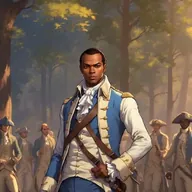 Parley2 crystals · Event · Common
Leaders: Edward Teach "Blackbeard"