 Lost Chapters
Dev Diary: Why We Made a History Card Game
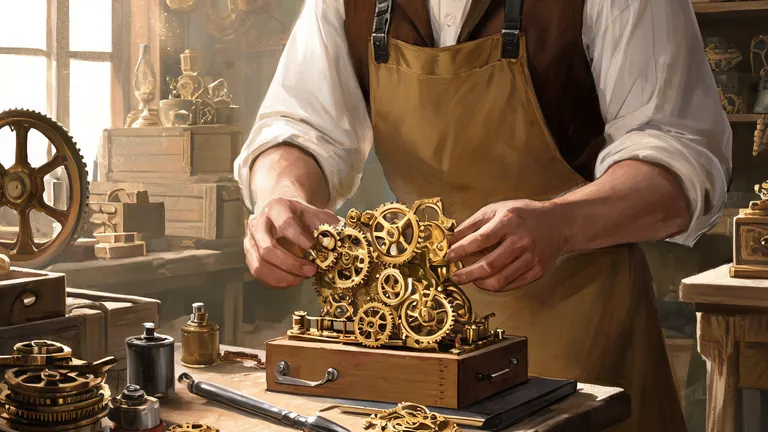
Short answer: We made Lost Chapters because history is full of people who would make great cards, and because a good strategy game is a great reason to go read about them. Our goal is a history card game with real depth, real people treated with respect, and a clear line between what actually happened and the story we invented around it.
This is the first entry in our dev diary. It is less about a single feature and more about the rules we gave ourselves before we designed a single card. If you want to know whether Lost Chapters takes history seriously, or whether it is a "real" card game or an educational one, this is the post for you.
Why a history card game at all?
Collectible card games are already about characters with distinct personalities. A good card makes you feel who someone is in two or three lines of rules text. History gives us thousands of those characters for free, and they are more surprising than anything we could invent.
Look at the six historical Leaders in our first set:
- Nikola Tesla leads Gold, the inventors. His deck builds Tinker Tokens and grows an engine, because that is what an inventor does.
- Martin Luther King Jr. leads Cobalt. His deck is about Resolve and unity: characters that survive pressure grow stronger together.
- Neil Armstrong also leads Cobalt, with a deck about planning and card flow.
- Amelia Earhart leads Emerald, the explorers. Her characters fly over blockers.
- Edward Teach, "Blackbeard" leads Garnet. His deck plunders: hit the enemy Leader and they discard.
- George Washington leads Quartz, the founders. His deck is about endurance and an army that moves as one.
Each one plays differently, and each deck plan is a small argument about what made that person remarkable. That is the heart of the game.
Rule 1: Depth first
We did not want a history-themed reskin of a simple game. Lost Chapters is built for players who enjoy Magic: The Gathering or the One Piece Card Game, and it borrows the decisions we love most from that family of games:
- A growing resource. You gain 2 crystals a turn, up to 10, and spend them on cards, abilities and infusing your characters.
- Instant speed. Crystals you do not spend stay open on your opponent's turn for Counter cards and Brace. Holding back is often the strongest play.
- Leaders with a plan. Every Leader has an always-on passive, a once-per-match Command and three Signature cards.
The game also has a mode for 3 to 5 players, where you can step in to save another player from a charge, and the table deals that follow are half the fun.
Rule 2: Every rule must work on a phone and on a kitchen table
We set a strict test early: every rule has to work in the browser on a phone, and also with physical cards, a few counters and no app at all. That means no hidden bookkeeping a table cannot track and no effects that only make sense because a computer remembers them. It keeps the rules honest. If you can explain a rule to a friend across a table, you can learn it on a small screen too.
It is also why Lost Chapters runs in any modern browser with nothing to download. You can play at lostchapters.org/play on a laptop, a tablet or a phone.
Rule 3: Real people are treated with respect
Our Leaders are historical figures who have died. No living people lead decks. Cards show people at the moments that made them matter, and the game never puts words in their mouths that they did not say. When a card is named after a famous phrase or event, the card is about the event, not a rewrite of it.
Some figures in history did terrible things. Garnet is the colour of rebels, pirates and war, and war is not tidy. We include hard chapters of history where they belong in the story, but we do not celebrate cruelty, and we do not build marketing around villains.
Rule 4: Keep the story and the history apart
Lost Chapters has an invented frame story. In it, a purple crystal cracks time, splinters called shards fall through history, and the heroes who pick them up are pulled into Marginalia, a world in the margins of the past. When a shard cracks, an Echo climbs out: a copy of a hero made from legend instead of truth. The only thing that breaks an Echo is the true story, played back at it.
We like that idea a lot, because it is really about how legends drift away from the people behind them. But it is fiction, and we label it that way. On this blog, every history article has a section marked Real history with sources, and any game story is marked In the game.
Legends are a good example of why this matters. The popular story that Betsy Ross sewed the first Stars and Stripes for George Washington was first told publicly by her grandson, William Canby, in a speech in 1870, and Historic Philadelphia, which runs the Betsy Ross House, notes that there are no written records that prove it. What the record does show is that she was paid by the Pennsylvania State Navy Board in May 1777 for making flags. "Molly Pitcher" is even harder to pin down: the National Archives' Prologue magazine describes her as a legend built from the stories of many Revolutionary women, though the tale is most often linked to Mary Ludwig Hays at the Battle of Monmouth. In the game, Betsy Ross and Molly Pitcher are fun cards. In the history notes, we tell you what the record actually shows. Folk heroes like John Henry are in the game too, and we say plainly that they are legends.
Rule 5: Free to play should mean fair to play
Lost Chapters is free. Everything that helps a player win can be earned by playing: every account always owns a full, legal starter deck, new accounts start with free packs, and gold from matches, daily visits, challenges and the season pass builds your collection over time. You can buy Gems if you want to, mostly for cosmetics like boards, companions and card styles.
Because many history fans are students, we also added real limits for younger players: no real-money purchases under 13 unless a parent turns them on, a default monthly cap for players aged 13 to 17, break reminders and parental controls that do not need a password.
Rule 6: Balance by testing, not by feel
Every Leader is tested in many thousands of simulated AI-versus-AI games, and we aim for each one to win close to half of its games against the field. When a Leader is too strong, we change its numbers and test again. Card ids never change, so your decks and collection always survive a balance pass. We will explain the bigger changes in our patch notes.
Where we are going next
Our first set is all about American history: inventors and thinkers, explorers and rebels, founders and soldiers. Our next drop, Runes & Ravens, arrives on December 1, 2026, with a Norse theme. We will share more as cards are officially revealed.
Over time, we want Lost Chapters to visit many eras and places. The rules above travel with us.
Come play, and tell us what we got wrong
If you spot a history mistake on a card or in an article, we want to hear about it. Use the feedback button in the game and tell us which card and what source you are reading. The best way to see what we are building is to play it: open Lost Chapters, pick a Leader and see whose chapter you write first. New to card games like this? Start with our beginner guide.
Sources
- Lost Chapters Rules of Play (PDF)
- Did She or Didn't She? Historic Philadelphia (operator of the Betsy Ross House)
- Molly Pitcher, American Battlefield Trust
- Molly Pitcher, Prologue Magazine, National Archives
Cards in this post
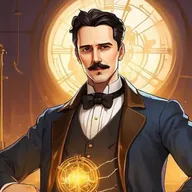 Nikola Tesla, Father of Electricity8 crystals · Character · Legendary
 Martin Luther King Jr.7 crystals · Character · Legendary
 Amelia Earhart, Adventurer3 crystals · Character · Legendary
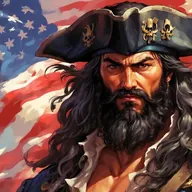 Edward Teach "Blackbeard"7 crystals · Character · Ultra-Rare
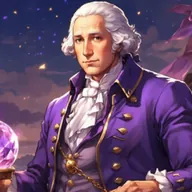 George Washington, Freeworld Founder7 crystals · Character · Legendary
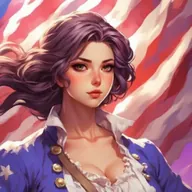 Betsy Ross, American Dream6 crystals · Character · Ultra-Rare
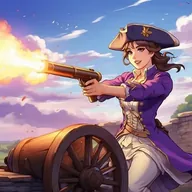 Molly Pitcher, Cannoneer1 crystal · Character · Uncommon
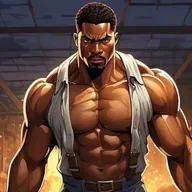 John Henry, Master of Machine4 crystals · Character · Rare
Leaders: Nikola Tesla, Martin Luther King Jr., Neil Armstrong, Amelia Earhart, Edward Teach "Blackbeard", George Washington